Does Uganda Have Gorillas?
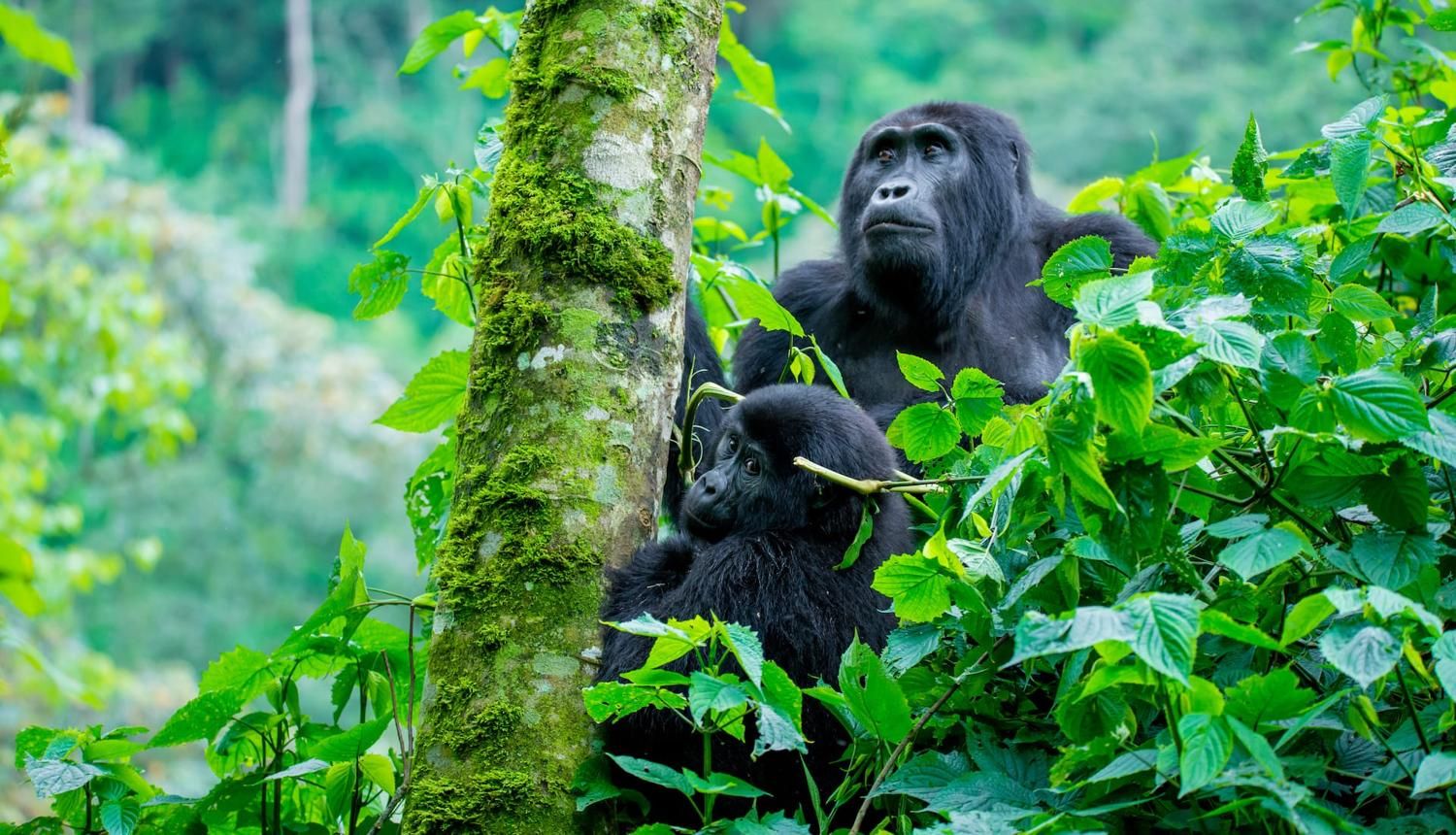
Does Uganda Have Gorillas? Yes, Uganda has gorillas. In fact, Uganda is one of only three countries in the world where endangered mountain gorillas can be found in the wild. These remarkable primates live in the country’s dense tropical forests and are among the most fascinating animals on Earth.
Many people associate Uganda with its rich wildlife, beautiful landscapes, and diverse national parks. However, mountain gorillas are among the country’s most famous wildlife species. Their presence has made Uganda an important destination for wildlife research, conservation, and nature-based tourism.
Understanding where gorillas live, how they behave, and why they are important can help people appreciate the role Uganda plays in protecting one of the world’s rarest animals.
What Types of Gorillas Are Found in Uganda?
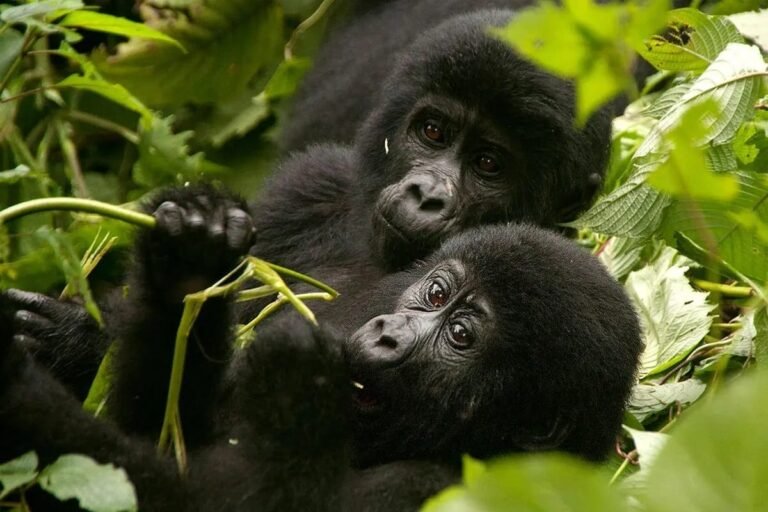
Uganda is home to the mountain gorilla, a subspecies of the eastern gorilla. Mountain gorillas are larger and more robust than many other primates and are covered with thick fur that helps them survive in cool, high-altitude forests.
Adult males, known as silverbacks, can weigh more than 180 kilograms. They are called silverbacks because of the distinctive silver-colored hair that develops on their backs as they mature.
Mountain gorillas are known for their intelligence, strong family bonds, and gentle nature. Although they are powerful animals, they are generally peaceful and spend much of their day feeding, resting, and interacting with family members.
Where Do Gorillas Live in Uganda?
Mountain gorillas in Uganda are found in two protected forest areas:
Bwindi Impenetrable National Park
Bwindi Impenetrable National Park is located in southwestern Uganda and contains one of the largest populations of mountain gorillas in the world. The park is covered by ancient rainforest, some of which is believed to be over 25,000 years old.
The dense vegetation, steep hills, and abundant plant life create ideal conditions for mountain gorillas to thrive.
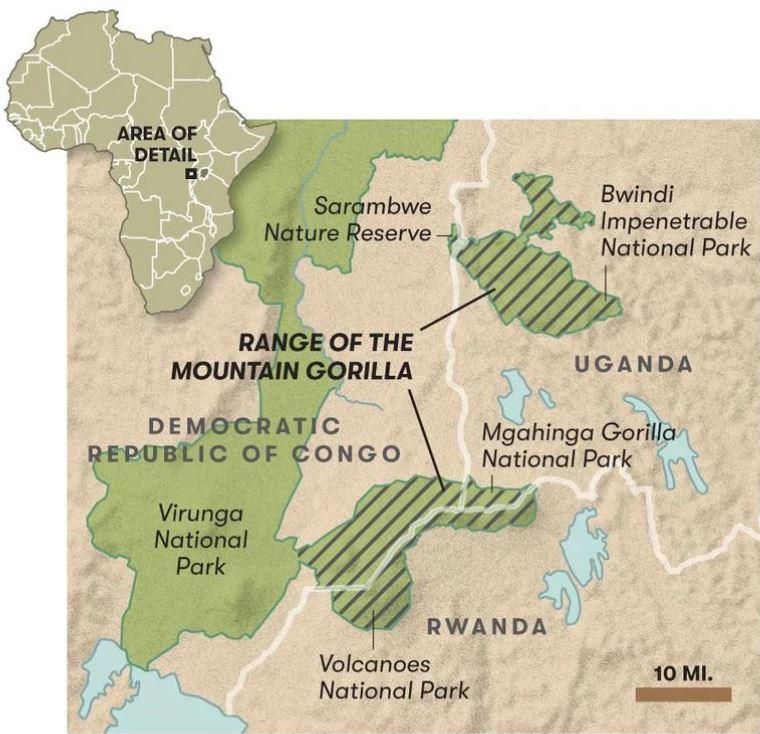
Mgahinga Gorilla National Park
Mgahinga Gorilla National Park is Uganda’s smallest national park. It forms part of the larger Virunga mountain ecosystem, which extends into neighboring countries.
The park contains bamboo forests, montane woodlands, and volcanic landscapes that support mountain gorillas and many other wildlife species.

How Many Gorillas Are There in Uganda?
Uganda is home to more than half of the world’s mountain gorilla population. This makes the country one of the most important locations for the survival of the species.
Mountain gorillas were once considered to be at extremely high risk of extinction. However, conservation efforts over the past several decades have helped their population gradually increase.
Despite these improvements, mountain gorillas remain a vulnerable species and continue to require protection from habitat loss, disease, and other threats.
What Do Gorillas Eat?
Mountain gorillas are herbivores, meaning they eat plants rather than meat.
Their diet consists mainly of:
- Leaves
- Shoots
- Stems
- Roots
- Bark
- Wild fruits
An adult gorilla can consume many kilograms of vegetation every day. Because their food sources are abundant in forest environments, mountain gorillas spend much of their time feeding.
Their role as plant consumers also helps maintain healthy forest ecosystems.
How Do Gorillas Live?
Mountain gorillas live in family groups known as troops. These groups are usually led by a dominant silverback.
A typical gorilla family may include:
- Adult females
- Young gorillas
- Infants
- Juveniles
- One or more silverbacks
The silverback protects the group, resolves conflicts, and guides family members to feeding areas.
Gorillas communicate through sounds, facial expressions, body movements, and gestures. Researchers have documented a wide range of vocalizations used for social interaction and communication.
Are Gorillas Similar to Humans?
Gorillas share approximately 98 percent of their DNA with humans, making them one of our closest living relatives.
Like humans, gorillas:
- Form strong family relationships
- Care for their young
- Show emotions
- Learn from experience
- Communicate with one another
Scientists continue to study gorillas to better understand primate behavior, social structures, and evolution.
Observing gorillas has provided valuable insights into the development of human societies and communication.
Why Are Gorillas Important?
Gorillas play an essential role in maintaining healthy forest ecosystems.
As they move through forests, they help disperse seeds from plants and fruits. This process supports forest regeneration and biodiversity.
Their presence also indicates a healthy environment. Protecting gorillas often means protecting entire ecosystems that support many other species of plants and animals.
In addition, gorillas are important for scientific research and conservation education around the world.
What Threats Do Gorillas Face?
Although mountain gorilla populations have shown encouraging growth, they still face several challenges.
Habitat Loss
Human population growth can place pressure on forests through agriculture, settlement, and resource use.
Disease
Because gorillas are genetically similar to humans, they can contract some human illnesses.
Climate Change
Changes in weather patterns may affect forest ecosystems and food availability.
Illegal Activities
Although greatly reduced in many areas, illegal activities such as poaching and habitat encroachment can still threaten wildlife populations.
Conservation organizations, governments, researchers, and local communities continue working together to address these challenges.
Why Is Uganda Important for Gorilla Conservation?
Uganda has become a global leader in mountain gorilla conservation.
Protected areas, scientific research, wildlife monitoring, and community involvement have all contributed to the survival of gorilla populations.
The country’s conservation efforts demonstrate how wildlife protection can help preserve biodiversity while supporting environmental sustainability.
Today, Uganda’s forests provide one of the safest habitats for mountain gorillas anywhere in the world.
Fascinating Facts About Uganda’s Gorillas
- Mountain gorillas live only in a few forest regions of East and Central Africa.
- Gorillas build new nests almost every night.
- A silverback can lead a family group for many years.
- Gorilla infants stay close to their mothers during their early years.
- Gorillas are highly intelligent and capable of solving simple problems.
- They use a variety of sounds to communicate with one another.
- Mountain gorillas rarely survive outside their natural habitat.
Frequently Asked Questions
Does Uganda have gorillas?
Yes. Uganda is one of the few countries in the world where mountain gorillas live in the wild.
Where are gorillas found in Uganda?
Gorillas are found in Bwindi Impenetrable National Park and Mgahinga Gorilla National Park.
What type of gorillas live in Uganda?
Uganda is home to the endangered mountain gorilla, a subspecies of the eastern gorilla.
Are gorillas endangered?
Mountain gorillas remain a vulnerable species, although their population has increased due to successful conservation efforts.
Why are gorillas important?
Gorillas help maintain healthy forests, support biodiversity, and provide valuable insights into animal behavior and evolution.
So As Gorilla Experts We Say That
The answer to the question “Does Uganda have gorillas?” is a definite yes. Uganda is one of the world’s most important habitats for mountain gorillas and plays a vital role in their conservation. These magnificent primates live in the country’s ancient forests, where they continue to thrive thanks to decades of protection and research.
As one of humanity’s closest relatives, mountain gorillas remind us of the importance of conserving wildlife and protecting the natural ecosystems that sustain life on Earth.