Skip to content
The white colobus monkey is one of Africa’s most striking and graceful primates. Known for its long white fur and flowing tail, this monkey stands out in the dense forests of East Africa.
Unlike many other primates, the white colobus monkey is rarely seen on the ground. It spends most of its life in trees. Therefore, it is often observed leaping effortlessly between branches.
Moreover, the white colobus monkey plays an important role in forest ecosystems. Its feeding habits help maintain plant diversity and forest health.
Because of its beauty and unique behavior, the white colobus monkey has become a favorite among safari travelers and wildlife photographers.
What Is a White Colobus Monkey?
The white colobus monkey belongs to a group of Old World monkeys. It is scientifically known as Colobus guereza.
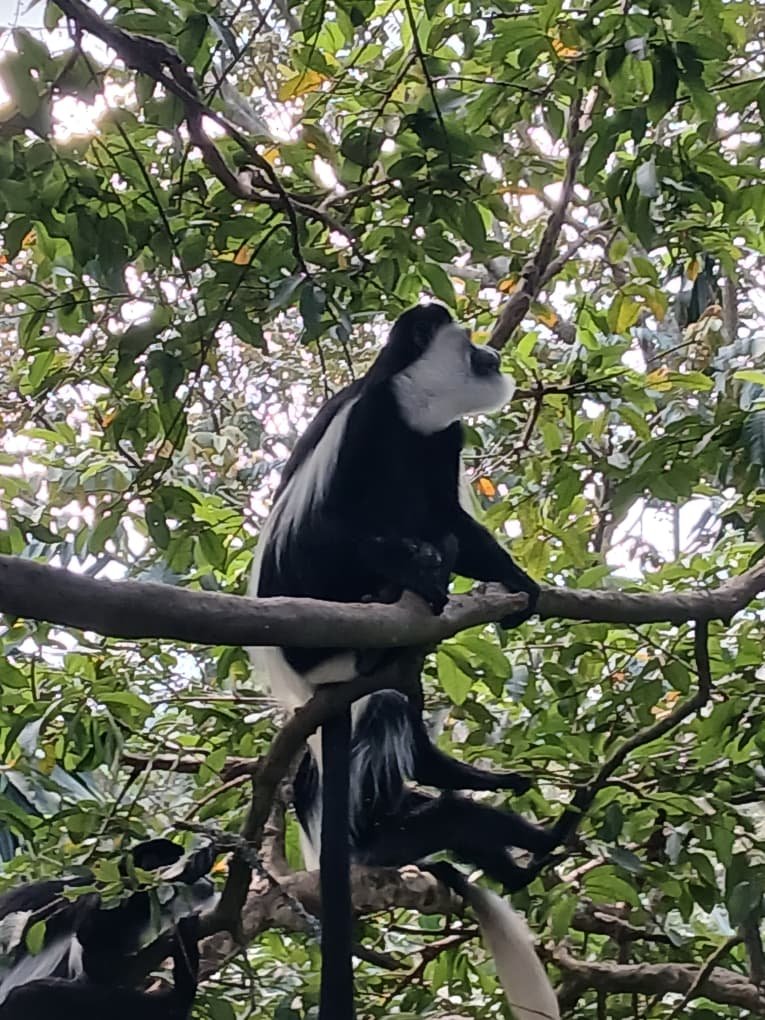
This species is commonly referred to as the black-and-white colobus monkey. Its body is covered in black fur, while its shoulders and tail are decorated with white hair.
Unlike most monkeys, the white colobus monkey does not have thumbs. This adaptation allows it to move quickly through trees.
As a result, it is considered one of the most agile primates in Africa.
Where Is the Colobus guereza found?
The Colobus guereza is widely distributed across East and Central Africa.
It can be found in countries such as
In Uganda, the white colobus monkey is commonly seen in:
These forests provide the perfect habitat. Dense canopy cover and abundant food sources are available.
Habitat and Lifestyle
The white colobus monkey prefers tropical rainforests and montane forests. It is usually found in areas with tall trees and thick vegetation.
Because it is highly arboreal, it rarely comes down to the ground. Most of its daily activities take place in the canopy.
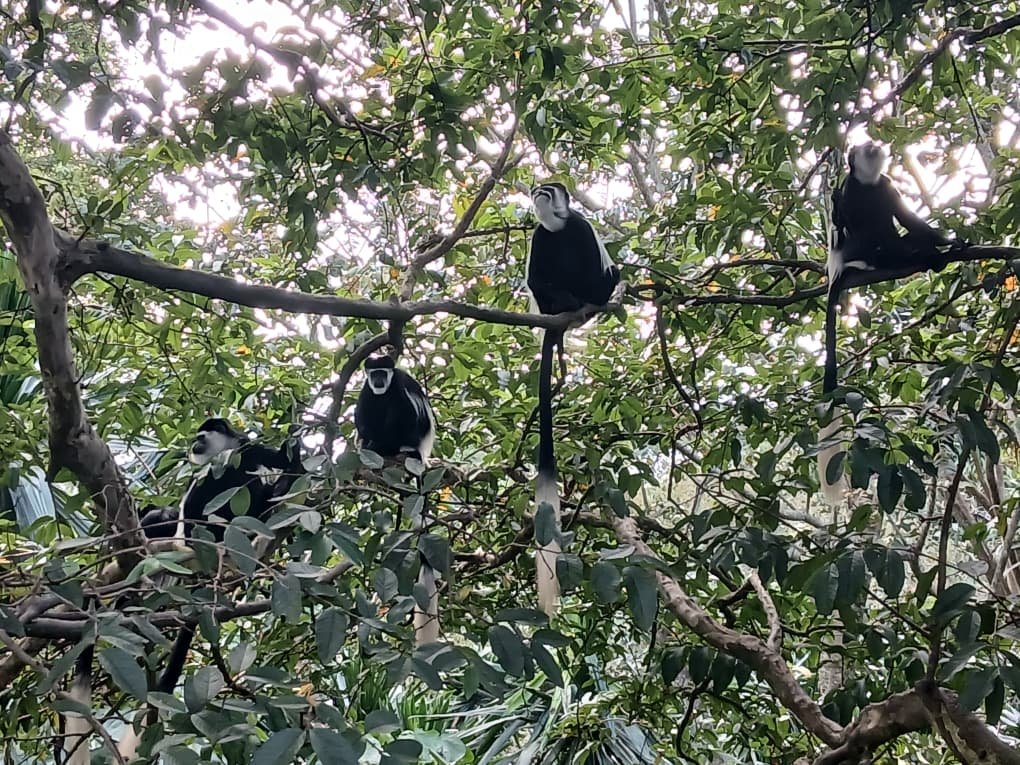
Groups of Colobus guereza are often seen resting in tall trees. They are social animals and live in groups of up to 15 individuals.
In addition, strong bonds are formed within the group. Grooming and communication are common behaviors.
Diet of the White Colobus Monkey
The white colobus monkey has a unique diet compared to other primates.
It mainly feeds on:
- Leaves
- Young shoots
- Fruits
- Flowers
Its stomach is specially adapted to digest leaves. This allows it to survive in environments where food is limited.
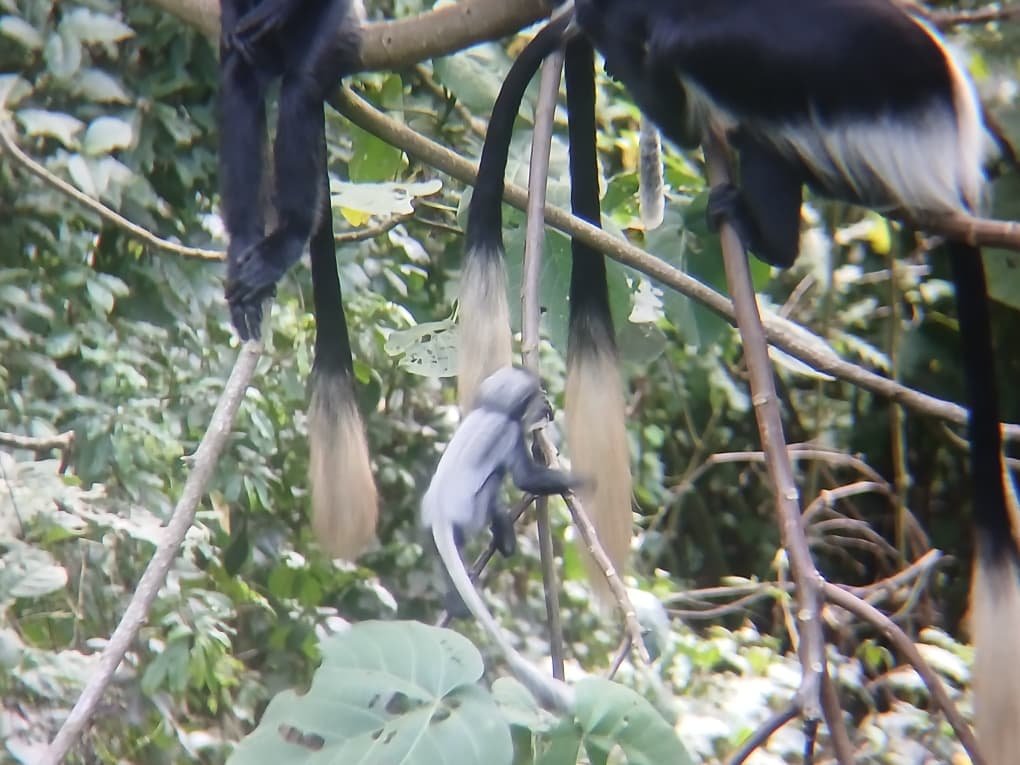
Because of this, the white colobus monkey is less dependent on fruit than other monkeys.
Therefore, it plays a key role in controlling plant growth in forests.
Behavior and Movement
The white colobus monkey is known for its graceful movements.
It can leap over 15 meters between trees. This ability helps it escape predators and move efficiently.
Unlike noisy primates, it is relatively quiet. Communication is done through soft calls and body language.
Additionally, the white colobus monkey spends long periods resting. This is necessary for digesting its leafy diet.
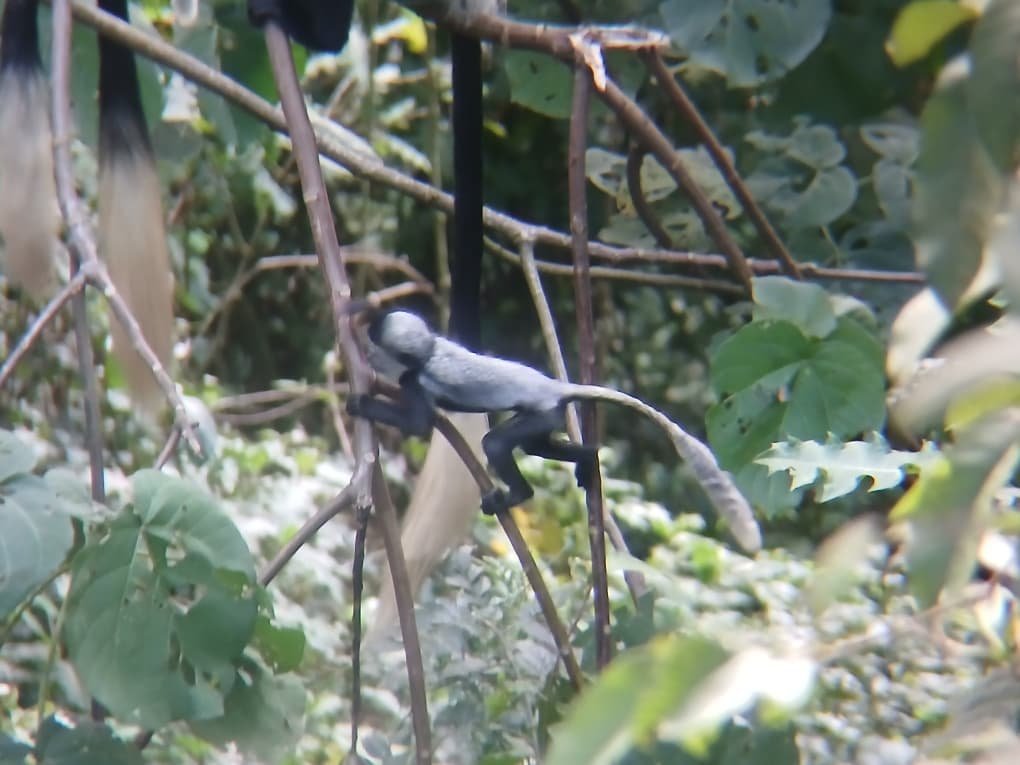
Because of its calm nature, it is often easy to observe during safaris.
Reproduction and Life Cycle
The life cycle of the Colobus guereza is fascinating.
Females give birth to one infant at a time. Interestingly, newborns are born completely white.
As they grow, their fur gradually changes to black and white.
Group members often help care for the young. This behavior strengthens social bonds.
Therefore, the survival rate of infants is improved.
Predators and Threats
The white colobus monkey faces several threats in the wild.
Natural predators include the following:
- Leopards
- Eagles
- Snakes
However, human activities pose a bigger risk. Habitat destruction and deforestation have reduced their population.
In some areas, hunting has also affected their numbers.
Because of this, conservation efforts are essential.
Conservation of the White Colobus Monkey
Efforts are being made to protect the white colobus monkey.
Organizations such as the Uganda Wildlife Authority are working to preserve its habitat.
National parks provide safe environments for these primates.
In addition, ecotourism supports conservation. Visitors contribute to funding protection programs.
Therefore, responsible tourism plays an important role.
Best Places to See White Colobus Monkey
If you want to see the Colobus guereza, several destinations are recommended.
1. Kibale Forest National Park
Kibale Forest National Park is known as the primate capital of the world.
Here, the white colobus monkey is often seen during chimpanzee tracking.
2. Bwindi Impenetrable National Park
Bwindi Impenetrable National Park offers dense forest habitats.
The white colobus monkey can be spotted alongside gorillas.
3. Queen Elizabeth National Park
Queen Elizabeth National Park provides both savannah and forest ecosystems.
Colobus monkeys are seen in forested areas like Kyambura Gorge.
Why Tourists Love the White Colobus Monkey
The white colobus monkey is loved by travelers for many reasons.
Its striking appearance makes it easy to photograph. Its calm behavior allows close observation.
Additionally, it is often seen during other activities like chimpanzee tracking.
Therefore, it adds value to any safari experience.
Safari Experience – What to Expect
During a safari, the colobus monkey is usually seen in trees.
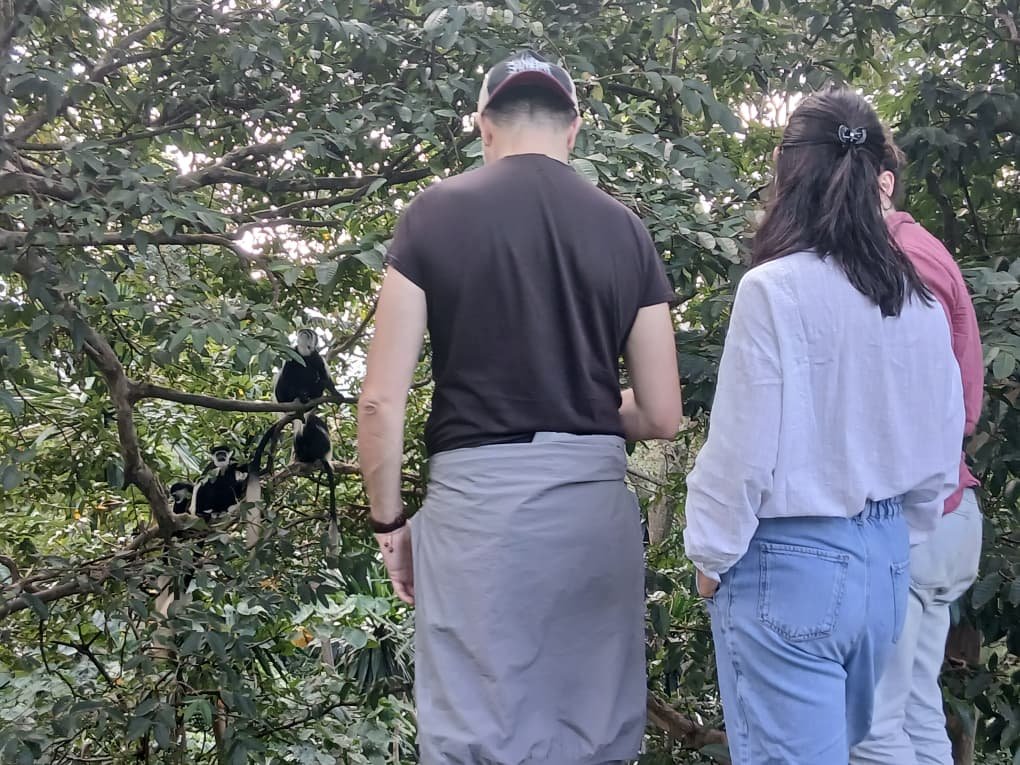
Guides help locate them by listening for movement in the canopy.
Once found, they are observed jumping between branches.
Photography opportunities are excellent. Natural light filters through the forest canopy.
Because of this, the experience is both peaceful and exciting.
Tips for Seeing White Colobus Monkey
To improve your chances of seeing the Colobus guereza, consider these tips:
- Visit forest parks like Kibale
- Travel with experienced guides
- Be quiet while observing
- Bring binoculars
Additionally, early morning walks offer better sightings.
Difference Between Colobus and Other Monkeys
The colobus monkey differs from other monkeys in several ways.
It does not have thumbs. It relies on leaves instead of fruit. It is quieter and more relaxed.
Because of these traits, it stands out among primates.
Role in the Ecosystem
The colobus monkey plays an important ecological role.
By feeding on leaves, it helps control vegetation growth. Seed dispersal is also supported.
Therefore, it contributes to maintaining forest balance.
FAQs About Colobus Monkey
Where can I see the Colobus guereza?
They are found in Uganda, Rwanda, Kenya, and Tanzania.
Are they dangerous?
No, they are calm and not aggressive.
Do they live on the ground?
No, they mostly live in trees.
What do they eat?
They mainly eat leaves and shoots.
Book Your Primate Safari Today
The Colobus guereza is one of Africa’s most beautiful primates. Its elegance and behavior make it unforgettable.
Uganda offers some of the best viewing opportunities. Forest parks provide ideal habitats.
At Berengei Africa Safaris, primate safaris are carefully planned. Expert guides ensure the best experience.
Contact us today and explore Africa’s incredible primates.