 Skip to content
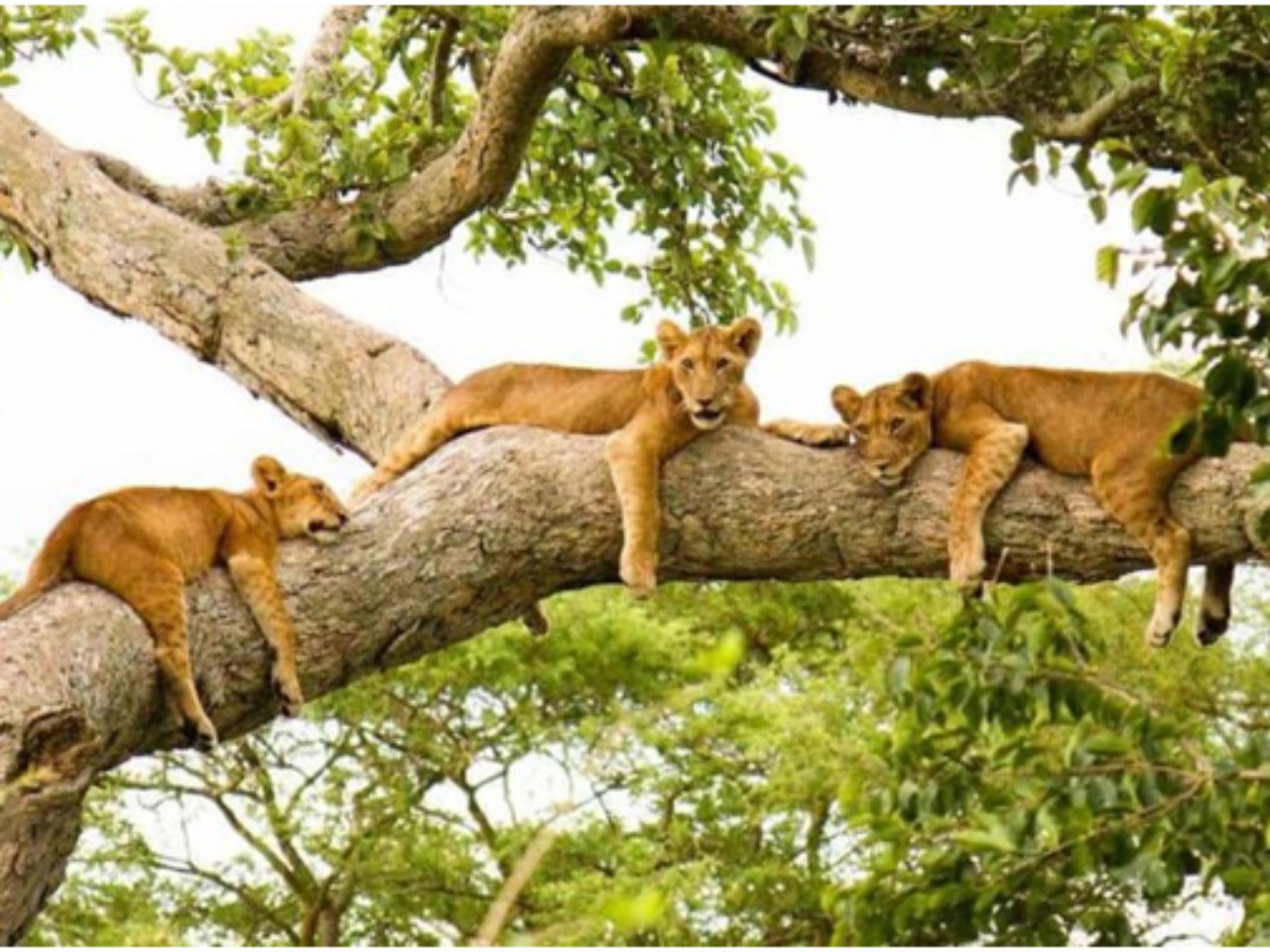
Queen Elizabeth National Park is Uganda’s most visited safari destination and one of East Africa’s premier wildlife parks. Nestled in western Uganda, the park spans 1,978 km² and boasts a remarkable variety of ecosystems, including savannahs, forests, wetlands, and lakes.
Visitors can enjoy game drives, boat cruises, chimpanzee trekking, and the rare spectacle of tree-climbing lions. With over 95 mammal species and more than 600 bird species, Queen Elizabeth National Park offers unforgettable wildlife encounters for safari enthusiasts, photographers, and nature lovers alike.

Whether you are on a short Uganda safari or a longer wildlife adventure, this park promises incredible experiences.
Location of Queen Elizabeth National Park
Queen Elizabeth National Park stretches across the Kasese and Rubirizi districts in western Uganda. It is approximately 400 km from Kampala and 160 km from Fort Portal, making it accessible for both domestic and international tourists.
The park borders Bwindi Impenetrable National Park, which allows travelers to combine gorilla trekking with a classic safari in one itinerary. Lake George and Lake Edward, both part of the park, offer stunning water landscapes and rich birdlife.
Wildlife in Queen Elizabeth National Park
Queen Elizabeth National Park is home to over 95 mammal species and 600+ bird species. Safari-goers can expect to see:
-
Lions (including the rare tree-climbing lions)
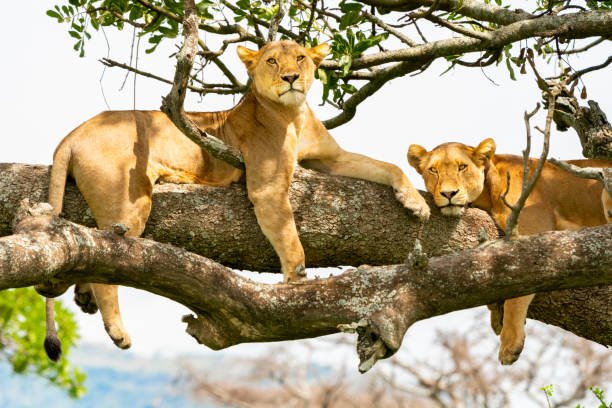
Lions on the tree resting after there meal -
Elephants
-
Leopards
-
Hippos
-
Buffaloes
-
Spotted hyenas
-
Uganda kob
-
Waterbucks
-
Crocodiles
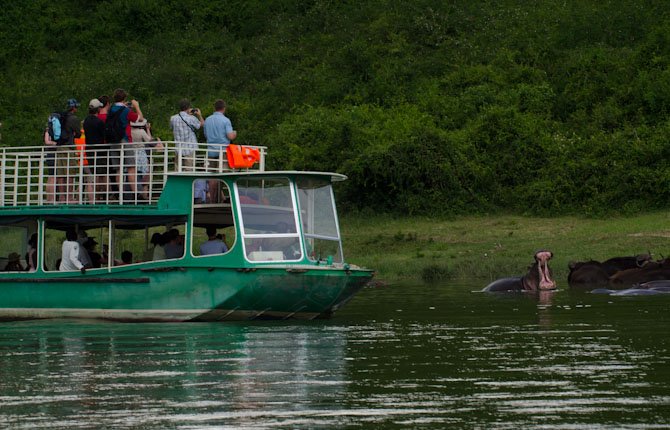
The Kazinga Channel, which connects Lake Edward and Lake George, is a hotspot for boat safaris, offering close encounters with hippos, crocodiles, and numerous waterbirds.
Tree-Climbing Lions – A Unique Attraction
One of the park’s most famous attractions is the tree-climbing lions in Ishasha. Unlike most lions in Africa, these big cats climb fig trees to rest during hot afternoons. This unique behavior makes Queen Elizabeth National Park a must-visit safari destination for wildlife enthusiasts.
Chimpanzee Trekking in Kyambura Gorge
Apart from classic game drives, visitors can trek to see chimpanzees in the Kyambura Gorge, a dense rainforest area within the park. Chimpanzee trekking in Queen Elizabeth offers an intimate wildlife experience, allowing visitors to observe these intelligent primates in their natural habitat.
Safari Activities in Queen Elizabeth National Park
Game Drives
Morning and evening game drives are the most popular activities. Expert guides help tourists spot wildlife while sharing insights about the park’s ecology, the behavior of the animals, and conservation efforts.
Boat Cruises
The Kazinga Channel boat cruise is perfect for photographers and birdwatchers. The calm waters allow for close sightings of hippos, crocodiles, elephants, and a variety of water birds.
Nature Walks
Guided walking safaris through designated areas give visitors a closer look at smaller wildlife, flora, and scenic landscapes.
Birdwatching
Queen Elizabeth National Park is a paradise for birdwatchers. Over 600 bird species have been recorded, including the rare shoebill stork and numerous kingfishers.
Best Time to Visit Queen Elizabeth National Park
The best time for a safari in Queen Elizabeth National Park is during the dry seasons:
-
June to September
-
December to February
During these months, wildlife sightings are easier because animals gather around water sources, and the park trails are dry and accessible.
The rainy seasons, however, bring lush green landscapes and fewer tourists, which some travelers prefer for photography and quiet safaris.
Accommodation in and Around the Park
Queen Elizabeth National Park offers a range of accommodations, from luxury lodges to budget campsites.
-
Luxury Lodges – For comfort and panoramic views over the savannah.
-
Mid-Range Safari Lodges—Offer a balance of comfort and affordability.
-
Budget Campsites – For adventurous travelers looking to be closer to nature.
Many lodges provide guided safaris, boat cruises, and cultural excursions to nearby communities.
How to Get to Queen Elizabeth National Park
Travelers can reach the park by road or air:
-
By Road: From Kampala, it’s approximately 8 to 9 hours by car. Roads are well-maintained for 4×4 safari vehicles.
-
By Air: Domestic flights to Kasese Airport are available from Entebbe International Airport. From Kasese, it’s a short drive to the park.
Many safari companies combine a Queen Elizabeth visit with Bwindi Impenetrable National Park or Mgahinga Gorilla National Park for gorilla trekking.
Why Visit Queen Elizabeth National Park
-
Witness tree-climbing lions, a rare phenomenon in Africa.
-
Experience diverse ecosystems: savannahs, rainforests, wetlands, and lakes.
-
Enjoy primates, elephants, and buffaloes in one safari destination.
-
Perfect destination for birdwatchers, photographers, and adventure travelers.
Queen Elizabeth National Park is ideal for short safaris, family trips, and extended East African wildlife adventures.
Plan Your Safari with Berengei Africa Tours
Make your safari in Queen Elizabeth NP unforgettable with Berengei Africa Tours. Our team provides:
-
Guided game drives and boat safaris
-
Gorilla trekking and chimpanzee trekking packages
-
Comfortable safari vehicles and professional guides
-
Tailored itineraries and expert advice
Contact Berengei Africa Tours today to book your Uganda safari adventure!
FAQs About Queen Elizabeth
Q: What is the best time to visit Queen Elizabeth National Park?
A: The dry seasons from June to September and December to February are best for wildlife viewing and accessible roads.
Q: Can I see gorillas in Queen Elizabeth NP?
A: No, gorilla trekking is available in Bwindi Impenetrable National Park and Mgahinga Gorilla National Park. Queen Elizabeth offers chimpanzee trekking instead.
Q: Are there tree-climbing lions in the park?
A: Yes, especially in the Ishasha sector, where lions climb trees to rest.
Q: How long does a typical safari last?
A: Safari itineraries vary from 1 to 3 days for short trips to 7 to 10 days for combined Uganda safaris, including Bwindi and Mgahinga.

Pingback: Kibale National Park: Chimpanzee Trekking & Primate Safari Guide